As the new year dawns, and the winter hibernation season turns to hope for the spring, we start to consider our plantings. While the recommended plantings in this article are geographically specific to Ohio, the reasoning is universal. When choosing plants for your landscaping, it is important to pick native plants that will thrive in the local environment.
Any yard of any size can grow native plants, which attract important insects and pollinators. Pollination is important for the propagation of local food and animal sources. It's part of bigger plan of eco-diversity.
Along the same vein, perhaps even more importantly, you should avoid invasive species of plants for several reasons. Invasive species crowd out other native species, upsetting the natural eco-system. An example of a popular but invasive plant is the well-known butterfly bush.
An invasive species will easily spread but as it spreads and flourishes, it will crowd out the natural species to the region and upset the delicate balance of nature.
Additionally, in the example of the butterfly bush, while it contains a great deal of attractive nectar and draws in butterflies, it is not the right host plant for the insect. Think of butterfly bushes as the "fast food" of your garden. Sure, the butterflies will come and dine, but they will not be healthy and will not be able to reproduce, thereby negating the intent of attracting pollinators.
Continuing the example, since an invasive species does not serve a proper host for the caterpillars, it also disrupts the food sources for birds like chickadees which require thousands of caterpillars to survive. A baby chickadee needs 6000 + caterpillars until it is an adult. Baby birds require the caterpillars for protein that is not provided by other food sources.
Better choices include butterfly weed, oak trees, and milkweed. Many conservation groups collect milkweed seeds to helps spread more milkweed. Those are the right sort of plants to help increase the population of natural pollinators.
Some of the appropriate native plants that an Ohio gardener may choose include:
Butterfly Weed
Black Eyed Susan
Goldenrod
Wild Geranium
White Trillium
Milkweed
All these plants will thrive and enhance your yard in a natural and sustainable manner. They will become part of the eco-system supporting pollinators, birds, and soil.
These plants are widely available at local nurseries and a much better choice for your yard than an invasive species. Ohio is in the Zone 5 planting region, meaning that the best time to plant is between frost season, from late May until early October. To learn more about appropriate plants for your region, you can contact your county soil and water conservation district.
Specific to Our Daily Green's location, contact the Mahoning County Soil and Water Conservation District for additional information and equipment rentals for larger land plots. The district also holds its annual milkweed pod collection from September 1 to October 31 each year.
Liquefied natural gas (LNG) is a potential disaster in the making. That’s the conclusion of a new report by Physicians for Social Responsibility, which surveyed an abundance of research on LNG’s threats to public health.
LNG is natural gas that is filtered and supercooled to -260° F, turning it from gas to liquid. That makes it easier to transport in special cryogenic tankers when pipelines aren’t an option, such as for overseas shipping.
But while the fracking that extracts the gas, and the pipelines that often move it, have generated well-deserved controversy, the risks of LNG haven’t gotten as much attention. They deserve more.
The new report finds significant risks from the extraction process (including gas leaks and air pollution), further pollution from the liquefaction process, and serious risks of fires and explosions.
And I mean serious. A full LNG tanker carries the energy equivalent of 55 atomic bombs. If one caught fire or exploded in a populated area, it could make an oil spill look like a picnic.
Even without exploding, the gas poses serious risks to our climate and health.
LNG is primarily composed of methane, a greenhouse gas that is 84–87 times more powerful than carbon dioxide over a 20-year period, which makes it a major contributor to climate change. And the fracking process, the report adds, injects a further “slurry of chemicals” into the surrounding environment. Many are known to contribute to strokes, cancer, and asthma.
LNG export facilities are often located in areas already plagued by dangerous levels of pollution from energy and industrial facilities — often areas with mostly African American, Native American, Hispanic, or low-income families. Facilities may also be sited close to schools and nursing homes.
“Such proximity, often reflecting these communities’ lack of political power, intensifies the impact on vulnerable populations and people with pre-existing health conditions,” the report notes. These communities are also more likely to lack the resources to address environmental health concerns.
Despite these dangers, there has been a boom in LNG production in the United States over the past 15 years. According to federal regulators, there are over 110 LNG facilities operating in the United States.
The United States is exporting record amounts of LNG to the global market right now, and there are plans to expand LNG facilities in many parts of the country. Meanwhile, the Trump administration is pushing an ill-advised proposal to transport LNG by rail.
Expanding these projects would increase pollution, put human health at risk, and increase the risk of catastrophic fires and explosions. It would also sink billions of dollars into infrastructure that would lock the United States into greenhouse emissions for decades to come.
Thanks to the Trump administration’s systematic rollback of critical health and safety protections, we simply don’t have the safeguards to protect ourselves or our planet from fracking, pipelines, or LNG.
As PSR’s new report makes clear, LNG poses a grave risk to our planet, our health, and our future. Instead, we need to demand healthy solutions for our communities. Our health needs to come first — before fossil fuel corporations’ bottom line. It's time for decision makers at all levels to protect their constituents, before it's too late.
The dark side of plant-based food – it's more about money than you may think
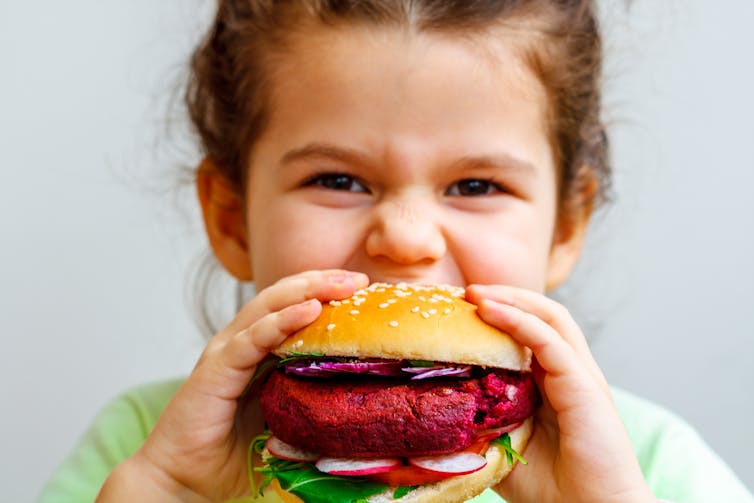
There’s more behind that vegan burger than it seems.
Nina Firsova/Shutterstock.comMartin Cohen, University of Hertfordshire and Frédéric Leroy, Vrije Universiteit Brussel
If you were to believe newspapers and dietary advice leaflets, you’d probably think that doctors and nutritionists are the people guiding us through the thicket of what to believe when it comes to food. But food trends are far more political – and economically motivated – than it seems.
From ancient Rome, where Cura Annonae – the provision of bread to the citizens – was the central measure of good government, to 18th-century Britain, where the economist Adam Smith identified a link between wages and the price of corn, food has been at the centre of the economy. Politicians have long had their eye on food policy as a way to shape society.
That’s why tariffs and other trade restrictions on imported food and grain were enforced in Britain between 1815 and 1846. These “corn laws” enhanced the profits and political power of the landowners, at the cost of raising food prices and hampering growth in other economic sectors.
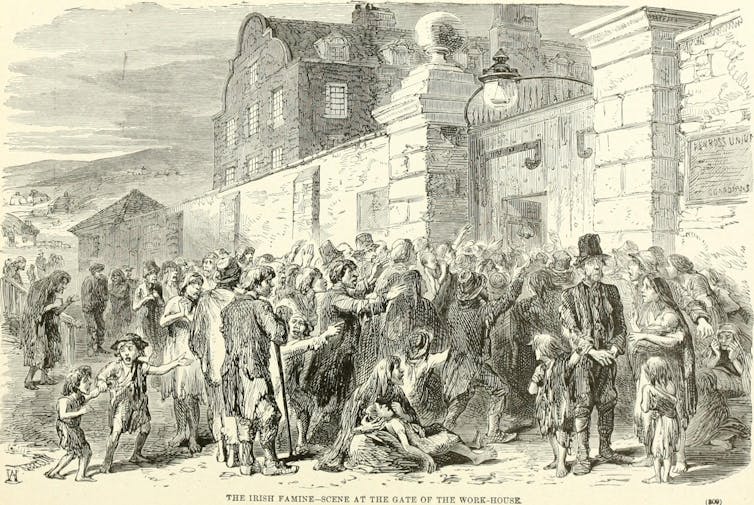
Over in Ireland, the ease of growing the recently imported potato plant led to most people living off a narrow and repetitive diet of homegrown potato with a dash of milk. When potato blight arrived, a million people starved to death, even as the country continued to produce large amounts of food – for export to England.
The Irish famine.internetarchivebookimages/flickr
Such episodes well illustrate that food policy has often been a fight between the interests of the rich and the poor. No wonder Marx declared that food lay at the heart of all political structures and warned of an alliance of industry and capital intent on both controlling and distorting food production.
Vegan wars
Many of today’s food debates can also be usefully reinterpreted when seen as part of a wider economic picture. For example, recent years have seen the co-option of the vegetarian movement in a political programme that can have the effect of perversely disadvantaging small-scale, traditional farming in favour of large-scale industrial farming.
This is part of a wider trend away from small and mid-size producers towards industrial-scale farming and a global food market in which food is manufactured from cheap ingredients bought in a global bulk commodities market that is subject to fierce competition. Consider the launch of a whole new range of laboratory created “fake meats” (fake dairy, fake eggs) in the US and Europe, oft celebrated for aiding the rise of the vegan movement. Such trends entrench the shift of political power away from traditional farms and local markets towards biotech companies and multinationals. Estimates for the global vegan food market now expect it to grow each year by nearly 10% and to reach around US$24.3 billion by 2026. Figures like this have encouraged the megaliths of the agricultural industry to step in, having realised that the “plant-based” lifestyle generates large profit margins, adding value to cheap raw materials (such as protein extracts, starches, and oils) through ultra-processing. Unilever is particularly active, offering nearly 700 vegan products in Europe.
Researchers at the US thinktank RethinkX predict that “we are on the cusp of the fastest, deepest, most consequential disruption” of agriculture in history. They say that by 2030, the entire US dairy and cattle industry will have collapsed, as “precision fermentation” – producing animal proteins more efficiently via microbes – “disrupts food production as we know it”.
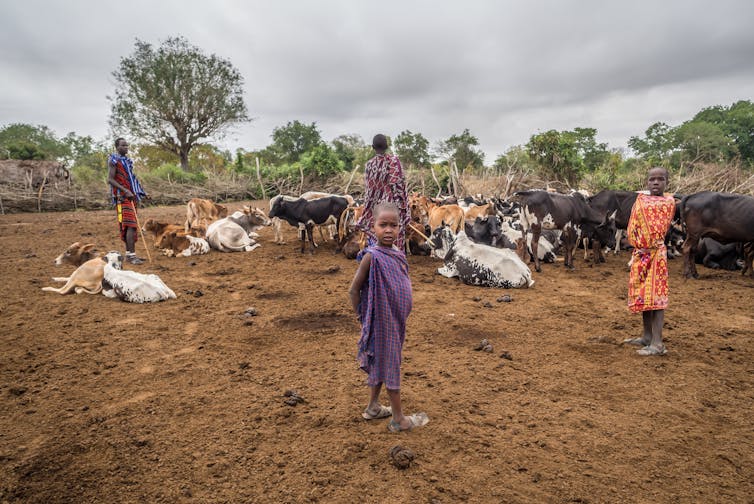
Westerners might think that this is a price worth paying. But elsewhere it’s a different story. While there is much to be said for rebalancing western diets away from meat and towards fresh fruits and vegetables, in India and much of Africa, animal sourced foods are an indispensable part of maintaining health and obtaining food security, particularly for women and children and the 800 million poor that subsist on starchy foods.
To meet the 2050 challenges for quality protein and some of the most problematic micronutrients worldwide, animal source foods remain fundamental. But livestock also plays a critical role in reducing poverty, increasing gender equity, and improving livelihoods. Animal husbandry cannot be taken out of the equation in many parts of the world where plant agriculture involves manure, traction, and waste recycling – that is, if the land allows sustainable crop growth in the first place. Traditional livestock gets people through difficult seasons, prevents malnutrition in impoverished communities, and provides economic security.
Often, those championing vegan diets in the west are unaware of such nuances. In April 2019, for example, Canadian conservation scientist, Brent Loken, addressed India’s Food Standards Authority on behalf of EAT-Lancet’s “Great Food Transformation” campaign, describing India as “a great example” because “a lot of the protein sources come from plants”. Yet such talk in India is far from uncontroversial.
The country ranks 102nd out of 117 qualifying countries on the Global Hunger Index, and only 10% of infants between 6–23 months are adequately fed. While the World Health Organization recommends animal source foods as sources of high-quality nutrients for infants, food policy there spearheads an aggressive new Hindu nationalism that has led to many of India’s minority communities being treated as outsiders. Even eggs in school meals have become politicised. Here, calls to consume less animal products are part of a deeply vexed political context.
Likewise, in Africa, food wars are seen in sharp relief as industrial scale farming by transnationals for crops and vegetables takes fertile land away from mixed family farms (including cattle and dairy), and exacerbates social inequality.
The result is that today, private interest and political prejudices often hide behind the grandest talk of “ethical” diets and planetary sustainability even as the consequences may be nutritional deficiencies, biodiversity-destroying monocultures and the erosion of food sovereignty.
For all the warm talk, global food policy is really an alliance of industry and capital intent on both controlling and distorting food production. We should recall Marx’s warnings against allowing the interests of corporations and private profit to decide what we should eat. Martin Cohen, Visiting Research Fellow in Philosophy, University of Hertfordshire and Frédéric Leroy, Professor of Food Science and Biotechnology, Vrije Universiteit Brussel
This article is republished from The Conversation under a Creative Commons license. Read the original article.